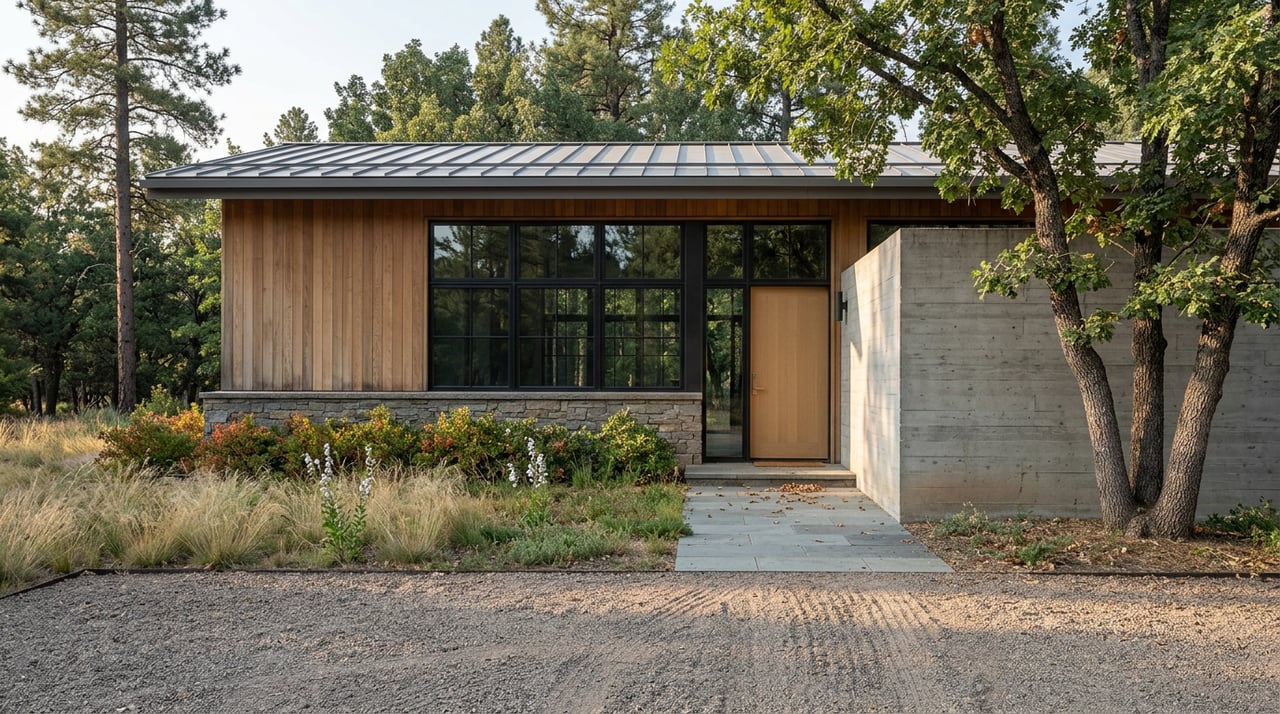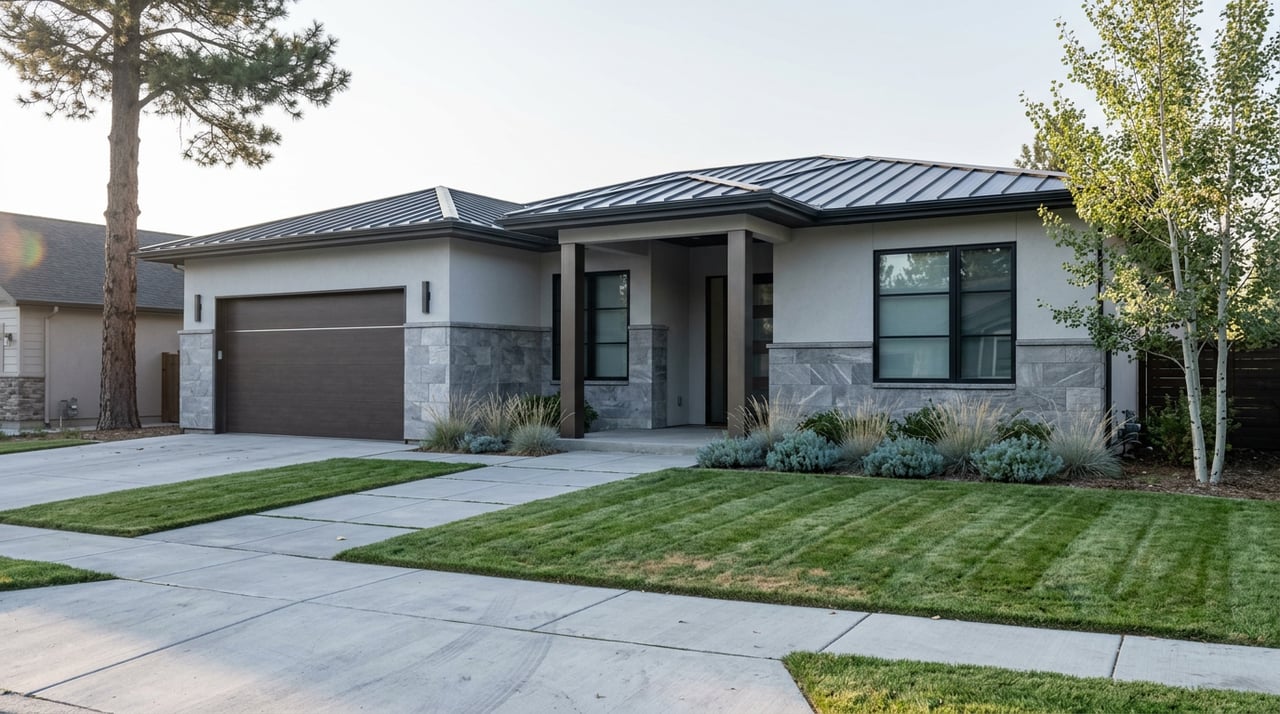
The Colorado Springs Planning Commission spent part of a July meeting this year on something that will not show up in any median price chart for a while: a rezoning request covering more than 1,100 acres of Banning Lewis Ranch. By the time the vote was final, the commission had cleared the way for roughly 5,000 new homes across two adjacent villages on the city's east side, a plan built on top of a master agreement that has sat mostly untouched since 1988.
If you have been reading the "Colorado Springs is finally balancing out" headlines this year, that vote is worth more of your attention than the median price is. The citywide numbers describe an average. Banning Lewis Ranch describes a specific place where thousands of new homes are about to compete for buyers in a way that Broadmoor, Briargate, or the Lewis-Palmer school district never will. Those are not the same market wearing different price tags. They are two different mechanisms that happen to get reported under one city name.
What the Planning Commission Actually Approved
The rezoning covers two parcels, referred to in city planning documents as Village B2 and Village C. Village B2 runs about 511 acres between Dublin Boulevard to the north and Stetson Hills Boulevard to the south, east of Banning Lewis Parkway. Village C covers roughly 658 acres to the south, reaching east far enough to touch U.S. Highway 24. Together, the two areas replace a nearly 40-year-old master plan that originally called for denser housing than city planners now want to build there.
The new plan is actually less dense than the 1988 version. Where the original agreement would have allowed around 4,000 homes in Village B2 alone, the updated plan caps each village at closer to 2,500 homes, mixing single-family lots with pockets of townhomes and duplexes. The plan also sets aside land for a school site in District 49 and about 15 acres for neighborhood parks. Oakwood Homes, the builder already active in other parts of Banning Lewis Ranch, is behind both proposals, with pricing in the broader community historically starting in the high $200,000s.
One detail matters for anyone trying to time a purchase around this: the vote only got the plan through the Planning Commission. It still needs City Council approval before ground actually breaks on most of that acreage, and no public construction timeline had been confirmed as of the most recent reporting. Approved zoning is a real signal about where supply is headed. It is not the same as homes hitting the market next quarter.
The Citywide Numbers Everyone Is Quoting Don't Even Agree With Each Other
Here is where the "balanced market" story gets shakier than it sounds. Depending on which tracker you check, the Colorado Springs median sale price for July 2026 lands anywhere from roughly $460,000 to just under $500,000. Days on market for the same window shows an even wider spread, from the low 40s up into the mid-50s, depending on whether the source is counting Pikes Peak MLS closings, Redfin's rolling three-month window, or a different sample entirely. Inventory estimates are just as scattered: one local count puts active supply at 4,312 homes for July 2026, another calculates that as a 1.34-month supply, and a third reads the same general period as closer to 3.8 months.
None of these sources is wrong. They are measuring different slices of the same city, at slightly different times, using different definitions of what counts as a sale. But that disagreement is itself a clue. A market that behaved uniformly across every neighborhood would produce numbers that converge, not numbers that swing by tens of thousands of dollars and more than ten days depending on the source. The spread is what it looks like when you average together a handful of submarkets that are not actually moving in the same direction.
Why Broadmoor and Briargate Aren't Playing by the Same Rules as the East Side
The mechanism holding resale inventory tight in Colorado Springs' established neighborhoods has very little to do with anything happening at Banning Lewis Ranch. It is the mortgage rate lock-in effect, and it is a national story with a very local consequence here.
A national survey of more than 700 agents conducted in the spring of 2026 found that 61% still describe the rate lock-in effect as a major or moderate factor in whether homeowners choose to list. Roughly a third of sellers working with those agents held mortgage rates below 5% and were listing anyway, but that means close to two-thirds were not. In a city where much of the desirable, amenity-anchored housing stock was financed years ago at rates nowhere near today's 6.3% to 6.5% range, that math keeps a lot of otherwise-sellable homes off the market.
You can see the effect most clearly in the districts that command the highest prices. As of June 2026, average detached home values were running near $973,000 in Lewis-Palmer D38 and around $735,000 in Academy D20, both districts where local agents describe demand as holding steady even as inventory improves elsewhere. Broadmoor gets described the same way: a luxury enclave that local brokers say has stayed largely insulated from the affordability pressure showing up in the rest of the city. Briargate tells a similar story from a different price point, with buyers who purchased there in 2018 reportedly sitting on strong equity gains, which gives current owners even less incentive to trade a low rate and a paid-down mortgage for a new one at today's cost.
A Colorado Springs broker put the seller side of this plainly in a February 2026 interview with the Colorado Springs Gazette:
"Sellers are saying, if I can't get my number, I'm just not moving."
That is the lock-in effect in one sentence. It has nothing to do with Village B2 or Village C. It is homeowners in established neighborhoods deciding that staying put costs less than moving, and that decision is what keeps resale inventory scarce in exactly the areas where Banning Lewis Ranch's new supply cannot reach.
Two Mechanisms, One City
| Submarket | What's driving supply | What buyers are seeing in 2026 | What it likely means for you |
|---|---|---|---|
| Banning Lewis Ranch corridor (District 49) | Fresh Planning Commission approval for up to 5,000 new homes across two villages | New-construction pricing starting in the high $200,000s, most acreage still pre-construction pending City Council sign-off | Builder incentives and negotiating room now, more direct competition from new inventory once construction ramps up |
| Broadmoor and Cheyenne Mountain (District 12) | Owners holding sub-5% mortgages who won't trade into today's rates | Described by local agents as largely untouched by citywide affordability pressure | Expect tight resale inventory and faster-moving offers even while citywide averages look softer |
| Lewis-Palmer D38 and Academy D20 | Established, high-demand districts with low turnover | Average detached prices near $973,000 in D38 and $735,000 in D20 as of June 2026 | Premium pricing holds steady even as citywide days on market stretch out |
| Widefield D3, Harrison D2, Fountain D8 | Older housing stock and lower price points where lock-in pressure bites less | Positioned by local agents as the city's affordability tier | Behavior closer to the citywide averages you see quoted in most market updates |
What This Actually Means If You're Shopping
If your search is centered on Broadmoor, Briargate, or either of the higher-priced school districts, do not expect the citywide "buyers have more leverage" headline to describe your experience. The homes that would normally soften that market are staying with owners who have no financial reason to sell. You are competing for a smaller pool than the citywide numbers suggest.
If your search can flex toward the east side, the calculation is different but comes with its own timing question. Banning Lewis Ranch is about to add real, new supply, but the Planning Commission's approval is a starting gun, not a finish line. City Council still has to sign off, and the builder has not confirmed a public construction schedule for the newly approved acreage. Watching that approval move through Council, and watching for Oakwood Homes' next phase announcements, will tell you more about actual timing than any citywide forecast will.
Either way, the lesson is the same. A citywide median is an average of neighborhoods that are behaving nothing alike right now. One is frozen by a rate a homeowner refuses to give up. The other is about to be reshaped by a zoning vote that most buyers never hear about until the first homes are already under contract.
Frequently Asked Questions
Is Banning Lewis Ranch inside Colorado Springs city limits? Yes. The roughly 24,000-acre area was annexed into the city in 1988, though large sections sat undeveloped for decades under the original agreement.
Does the Planning Commission's approval mean construction is starting now? Not yet. The plans for Village B2 and Village C still need Colorado Springs City Council approval, and no confirmed construction timeline had been published as of the most recent reporting.
Will new construction at Banning Lewis Ranch lower prices citywide? There is no evidence for that. The new supply is concentrated in one corridor on the east side, tied to District 49 schools and specific price points starting in the high $200,000s. It has no direct bearing on resale conditions in Broadmoor, Briargate, or the higher-priced school districts on the other side of the city.
Why do different market reports show different median prices and days on market for the same month? Because they are pulling from different samples. MLS-based counts, national listing-site aggregations, and metro-level datasets each define an active listing and a closed sale slightly differently, and they measure different time windows. The spread between them is a sign that citywide numbers are averaging together submarkets that are not behaving the same way.
Whether you are writing an offer on a resale home in a district where inventory barely moves, or working through a new-construction contract in a growth corridor like Banning Lewis Ranch, the closing mechanics are not the same. New construction brings its own timeline risks, builder contract terms, and title considerations that a straightforward resale never touches. First Alliance Title works both sides of that line every week across the Front Range, with named escrow teams who can walk you through what a specific contract type actually requires before you're staring down a closing date. If you are advising clients through either kind of deal this year, that is a conversation worth having early.