Trying to choose between a condo and a townhome in Boulder? The tricky part is that the name on the listing may not tell you how the property is legally owned, what your HOA covers, or what your title work will reveal. If you want fewer surprises before closing, it helps to understand how title, ownership, and HOA documents fit together in Colorado. Let’s dive in.
Why the condo or townhome label can mislead
In Boulder, a property marketed as a “townhome” may not always be a townhome in the legal sense. In Colorado, the legal structure is controlled by the recorded declaration and plat or map, not just the style of the building or the wording in the listing.
That matters because condominiums, cooperatives, and planned communities follow different ownership frameworks. A condo owner typically owns the unit plus an undivided interest in the common elements. In many planned-community townhome setups, the buyer generally owns the lot and improvements in fee simple, while also belonging to a mandatory HOA.
For you as a buyer, the key takeaway is simple: do not rely on the marketing label alone. Colorado has nearly 12,000 HOAs, and about 46% of the state’s population lives in a common interest community, so this issue comes up often.
How ownership often differs
Condo ownership in Boulder
With a condominium, your ownership usually centers on the interior unit, along with a shared interest in the common elements. Those common elements can include things like hallways, stairwells, elevators, roofs, exterior facades, underground parking, structural components, or recreational facilities.
In this setup, the association does not hold title to the common elements for the owners. Instead, owners share an undivided interest in them, as defined by the governing documents.
Townhome ownership in Boulder
With a townhome-style planned community, the ownership pattern is often different. Buyers generally own the lot and the improvements directly, subject to the declaration and often a party-wall or cross-easement agreement.
That can sound more straightforward, but the maintenance and use rights can actually vary a lot from one community to another. Two attached-home communities that look similar from the street may have very different document packages and very different closing issues.
Why title matters more than property style
A title commitment is more than a formality. In Colorado, it helps surface liens, covenants, easements, rights-of-way, HOA matters, mineral and water rights, and other obligations or restrictions that affect the property.
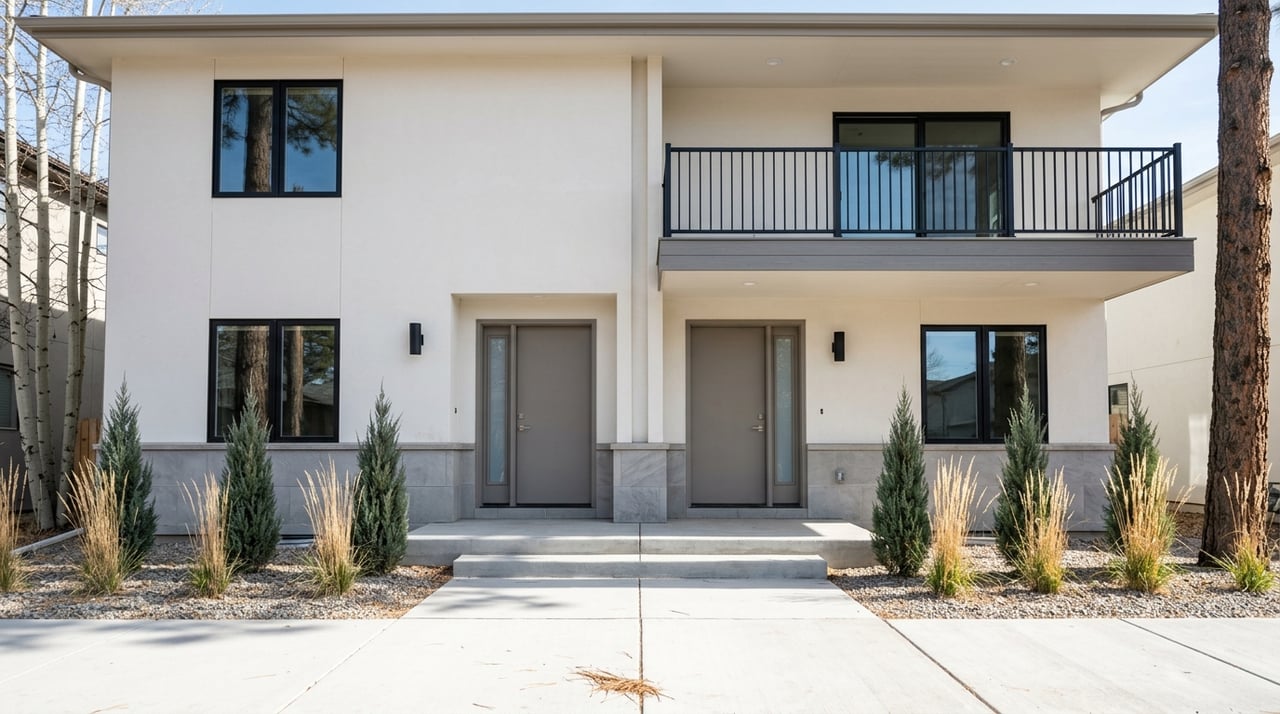
If you are buying in Boulder, this is one of the most important reasons to read beyond the listing sheet. A modern exterior and attached layout might suggest one thing, while the legal description and recorded documents tell a different story.
What the title commitment should show
A current ALTA title commitment is organized into several parts, including Notice, Schedule A, Schedule B Part I requirements, Schedule B Part II exceptions, and Commitment Conditions. For buyers, the practical value is that it maps out the rights and restrictions tied to the property before closing.
For condo-style properties, the legal description should match the declaration and map. For townhome-style planned communities, the legal description should also match the declaration and map, and it may also involve party-wall language or endorsement-specific details.
Why exceptions deserve close attention
Schedule B exceptions often contain some of the most important information in the file. These can point you to recorded declarations, covenants, plats, easements, and other matters that shape how you can use the property and what rights come with it.
In Boulder, that can affect practical issues such as shared access, exterior responsibilities, parking, storage, and maintenance obligations. The title commitment is not just about who owns the property. It is a roadmap to what comes with that ownership.
HOA documents are a separate review track
One of the easiest mistakes buyers make is assuming the title review and HOA review are the same thing. Under Colorado’s residential contract, they are separate.
Title Documents include recorded plats, declarations, covenants, conditions and restrictions burdening the property, plus documents listed as exceptions in the title commitment. Association Documents are a different package, and they come with their own delivery and review deadlines.
What is usually in the HOA package
The seller must deliver Association Documents by the Association Documents Deadline. That package can include:
- declarations
- articles
- bylaws
- operating agreements
- party-wall agreements
- responsible governance policies
- meeting minutes
- insurance lists
- assessment lists
- the current budget
- annual financial statements
- the most recent audit or review
- closing-related fees and charges
- any reserve study
- recent construction-defect notices
That is a lot of material, but each item can help you understand the financial and operational health of the community.
Why HOA review is so important
Colorado gives buyers the right to review HOA documents and terminate based on any unsatisfactory provision by the Association Documents Termination Deadline. If the documents arrive late, the buyer gets an added review window that runs until the earlier of closing or 10 days after receipt.
This matters because there is no central repository for HOA governing documents in Colorado. In many cases, a non-member purchaser receives them through the seller or broker, which makes timing and completeness especially important.
Maintenance responsibilities can differ more than you expect
Many buyers assume condos always mean more HOA maintenance and townhomes always mean less. In reality, the declaration controls the details.
For condos, the HOA often handles major shared components such as roofs, exterior surfaces, hallways, and structural areas. For townhome communities, maintenance responsibilities can be split in more varied ways through the declaration, party-wall agreement, or cross-easement documents.
Watch for limited common elements
Colorado law recognizes limited common elements as portions of the common elements that benefit some, but not all, units. The declaration determines how common expenses tied to those areas are assessed.
That means an area that feels private or exclusive, such as a patio, parking area, or other appurtenant space, may still carry shared rules or shared cost implications. You will want to confirm exactly how those spaces are defined in the documents.
Understand the insurance split
Colorado requires associations to maintain property insurance on common elements. Unit owners generally insure their private property, items not covered by the HOA policy, and liability.
That division can affect your out-of-pocket costs and the type of personal policy you need. It is another reason condo and townhome buyers should read the HOA materials carefully instead of assuming the coverage will be similar from one community to the next.
Parking and storage rights need verification
In attached-home communities, parking and storage are not always as simple as they appear in marketing remarks. Colorado’s residential contract specifically says buyers should investigate parking and storage rights if exact rights matter.
That point is especially important in Boulder, where parking can carry real day-to-day value. If a space, garage, bike area, or storage unit matters to you, make sure it is supported by the ownership documents and not just described as an amenity.
A practical Boulder buyer checklist
Before you remove your title or HOA deadlines, take time to confirm the basics.
Review these items before moving forward
- Confirm the recorded legal form of the property
- Review the title commitment and all listed exceptions
- Read the declaration, plat, and any party-wall or cross-easement documents
- Review the full HOA package, including budget, assessments, insurance, minutes, and reserve information
- Check for pending special assessments or signs of future repair costs
- Verify parking and storage rights in writing through the documents
- Make sure you are comfortable with the maintenance and insurance picture before removing deadlines
Some small planned communities in Colorado are exempt from most CCIOA requirements, so two similar properties may not come with the same document stack or process. That is another reason to focus on the recorded and delivered documents, not assumptions.
Why this matters for a smoother closing
When you understand whether a Boulder property is legally a condo or a planned-community townhome, you can ask better questions early. That helps you avoid confusion about ownership boundaries, shared areas, special assessments, insurance gaps, or rights tied to parking and storage.
A smoother closing usually starts with clear documents and enough time to review them. If you know what to look for, you are in a much better position to move forward with confidence.
If you want a local team that can help make the title and escrow side of your Boulder transaction feel clear, secure, and well organized, connect with First Alliance Title.
FAQs
What does condo ownership usually mean in Boulder?
- In a Colorado condominium, you usually own your unit plus an undivided interest in the common elements, as defined by the recorded declaration and map.
What does townhome ownership usually mean in Boulder?
- In many Colorado planned-community townhome setups, you generally own the lot and improvements in fee simple while also belonging to a mandatory HOA.
Why is the listing label not enough for a Boulder condo or townhome?
- In Colorado, the recorded declaration and plat or map control the legal structure, so a marketing label like “townhome” may not reflect the actual ownership model.
What title documents should Boulder buyers review for a condo or townhome?
- Buyers should review the title commitment, recorded plats, declarations, covenants, conditions and restrictions, and any documents listed as exceptions in the commitment.
What HOA documents should Boulder buyers review before removing deadlines?
- Buyers should review the Association Documents package, including governing documents, meeting minutes, insurance information, budget, financial statements, assessment lists, reserve information, and closing-related fees.
Why do parking and storage rights matter in a Boulder attached-home purchase?
- In attached-home communities, parking and storage rights may be part of the ownership package or governed by recorded documents, so buyers should verify those rights if they are important.