The Insider's Guide to Aspen, Colorado
There are mountain towns, and then there is Aspen. Most resort communities were invented for skiing and built from the parking lot up. Aspen was a silver town first, a near-ghost town second, and only later became the place where a hedge fund founder and a classical cellist might end up at the same dinner party. That layered history is why the town feels lived in rather than manufactured — and it's also why buying here works differently than almost anywhere else in the country. This guide walks you through what the town actually offers and what you genuinely need to understand before you sign a contract.
Neighborhood Overview & Location
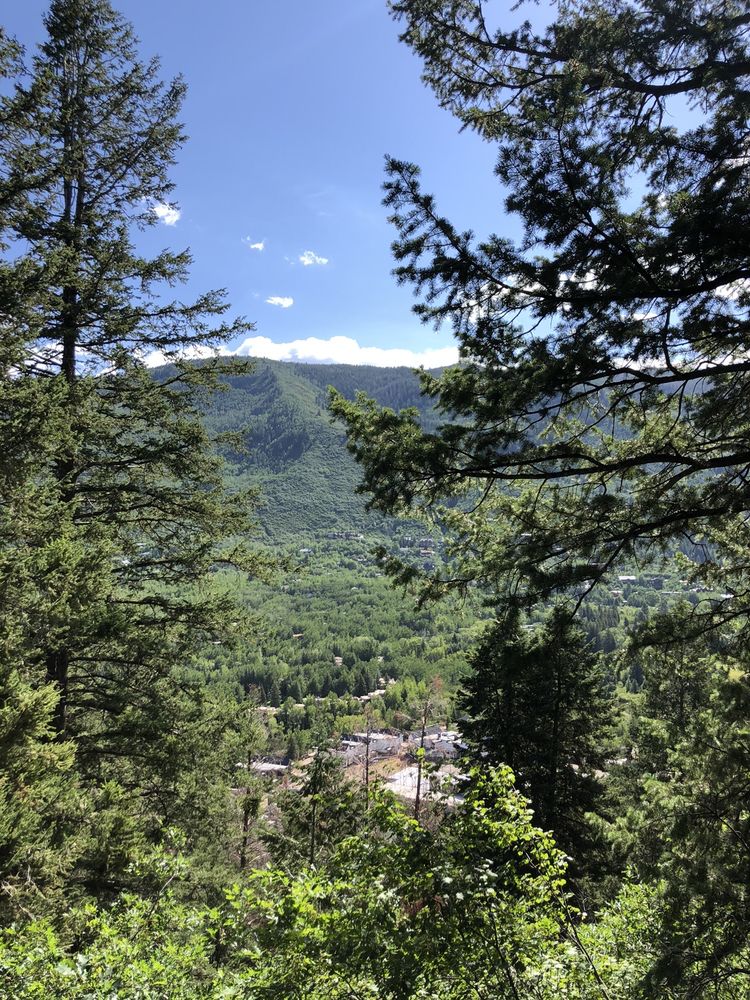
Aspen sits at nearly 8,000 feet in the remote Roaring Fork Valley, hemmed in by the Elk Mountains. The Roaring Fork River marks its northern edge; the steep face of Aspen Mountain — locals just call it Ajax — rises directly behind downtown to the south. To the east, Independence Pass opens as a seasonal alpine gateway; to the west, the valley widens toward Snowmass Village and the downvalley towns. It is a compact, deliberately contained place, and that containment is the whole point.
What sets Aspen apart is the "Aspen Idea," a philosophy planted in the 1940s by Walter and Elizabeth Paepcke built around the renewal of mind, body, and spirit. It still shapes the town's character today, which is why you'll find a Michelin-starred tasting menu and a globally significant ideas festival within walking distance of expert ski terrain.
The town breaks down into a few distinct micro-neighborhoods worth knowing by name. The Downtown Core is a walkable grid of historic brick buildings now occupied by art galleries, fashion houses, and serious restaurants, all steps from the Silver Queen Gondola. The West End is the quieter counterpoint — tree-lined streets, preserved Victorian miner's cabins, and the cultural campuses of the Aspen Institute and the Music Festival. And Red Mountain, the sun-facing hillside north of town often nicknamed "Billionaire Mountain," holds the trophy estates with full-on views of the slopes.
The short version of the history: Ute summer hunting grounds, then a silver rush in the late 1870s that briefly made Aspen one of the country's richest mining towns, then collapse after the 1893 silver crash and decades as a fading village. The postwar ski-and-culture revival is what produced the Aspen that exists now.
Local Real Estate Market at a Glance
Aspen real estate operates in its own economic weather system. Severe geographic limits, strict zoning, and almost no developable land left have made it one of the most resilient luxury markets on earth. After the frenzied post-pandemic buying spree, the market has settled into something healthier and more deliberate — inventory is slowly rebuilding, and buyers finally have a little room to think.
The single most important thing to understand is that this is really two markets at once. Overall transaction volume has slowed sharply, with closed sales down meaningfully year over year and the citywide median pulled down by a heavy mix of condo and fractional sales. At the same time, prices for the genuinely premier assets — Red Mountain, the West End — keep setting records. A falling median here reflects what's selling, not a decline in Aspen's underlying value.
| Market Metric |
Single-Family & Premium Luxury |
Overall City Market (incl. condos/fractionals) |
| Median List / Sale Price |
$10,950,000 – $17,500,000+ |
$2,800,000 – $4,025,000 |
| Average Days on Market |
115 – 124 days |
115 – 152 days |
| Inventory |
Highly scarce (~158 active listings town-wide) |
Modestly rising (+6.8% YoY) |
| YoY Price Trend |
Rising (+6.6% to +31% on ultra-high-end) |
Volume slowing; entry-tier median down ~13.7% |
A few takeaways worth carrying into any conversation with a seller. Days on market have pushed well past the 100-day mark, which means overpriced or poorly positioned homes now sit — pricing precision matters again. Inventory is up incrementally, enough to restore real choice after years of scarcity, but it's still roughly 40% below pre-2020 levels. And scarcity remains the ultimate rule: anything with privacy, walkability, or direct ski access still commands a premium, full stop.
Lifestyle & Things to Do
The rhythm of life here swings between physical exertion and high culture, often in the same afternoon. People genuinely do go from a brutal morning hike to a black-tie gallery opening, and the town is built to make that easy.
The dining scene punches far above the town's size, especially since the Michelin Guide arrived in Colorado. The White House Tavern, set in a 19th-century miner's cottage, is the local institution everyone has an opinion about, famous for its sandwiches and its crush. Betula brings French-Pan-American cooking and a rooftop view of Ajax. At the top end, Bosq earned a Michelin star with a foraged, hyper-local tasting menu, while Element 47 inside The Little Nell pairs contemporary American food with one of the best wine programs in the Rockies. Après-ski, meanwhile, is treated as a sacrament — Ajax Tavern at the gondola base is the champagne-and-truffle-fries ritual, and Belly Up is the intimate 450-capacity venue that somehow lands acts like LCD Soundsystem and The Killers.
Shopping runs the same dual register, rugged-meets-haute. The pedestrian malls hold flagships for Gucci, Prada, Moncler, and Hermès, but the most Aspen purchase you can make is a custom-shaped hat from Kemo Sabe. For collectors, galleries like Baldwin, Eden, and Casterline|Goodman keep museum-quality work on the walls.
Culture is where the Aspen Idea shows its hand. The Aspen Art Museum, housed in a striking Shigeru Ban–designed building, is a non-collecting institution that keeps the program current. In summer the West End meadows fill with the Aspen Institute's global gatherings and the Aspen Music Festival and School, which brings hundreds of the world's best classical musicians to open-air concerts at the Benedict Music Tent. The restored 1889 Wheeler Opera House runs film, comedy, and theater year-round.
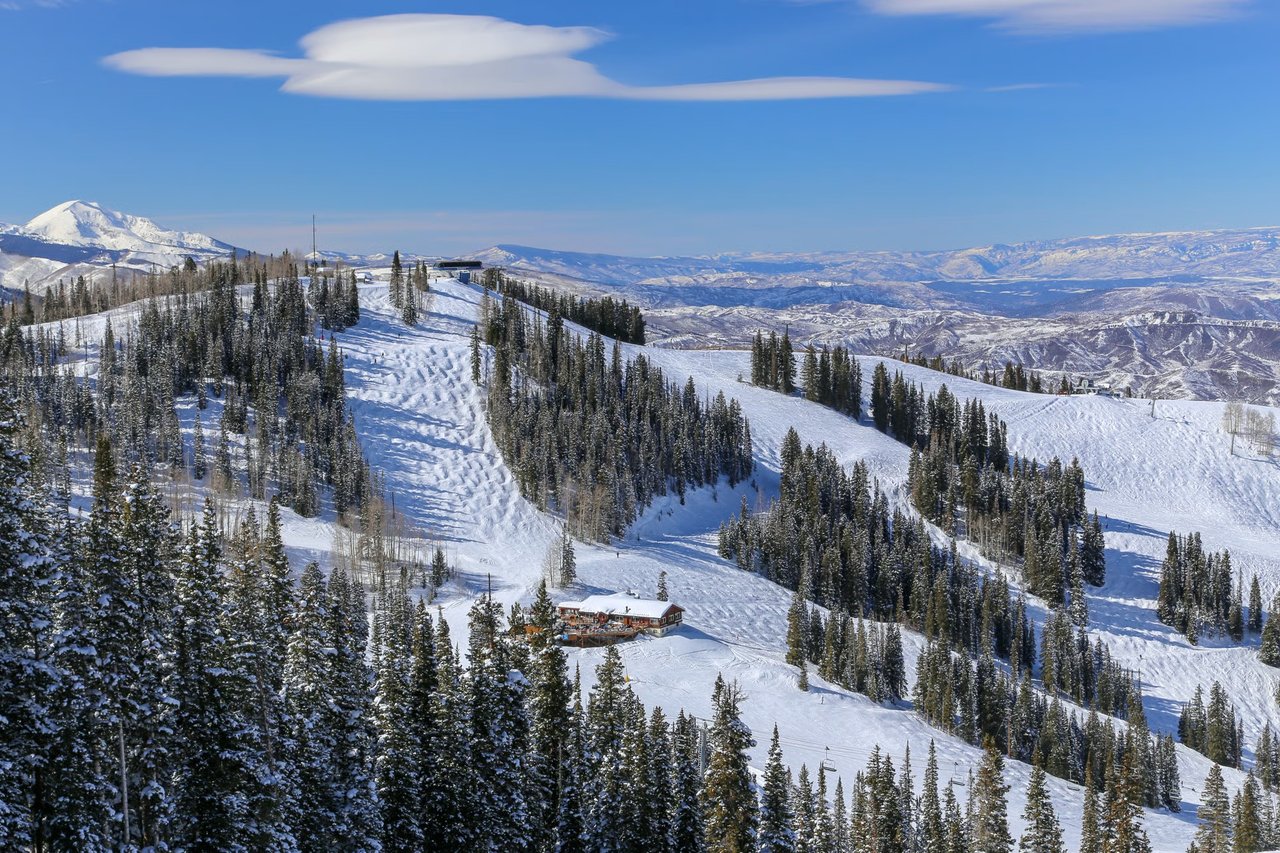
And then there's the actual reason most people come: the outdoors. Winter centers on the four mountains run by Aspen Skiing Company — Ajax for steep expert terrain right off downtown, Highlands for the hike-to Highland Bowl, Buttermilk for beginners and the X Games, and Snowmass for sprawling family cruising. The rest of the year belongs to the trails. The Ute Trail is a punishing switchback climb with a payoff view; Hunter Creek is the gentler, prettier walk past old ruins; and the paved Rio Grande Trail follows the old rail line 42 miles down the valley. A short trip out, the Maroon Bells — the most photographed peaks in North America — mirror themselves in Maroon Lake. For something quieter, the John Denver Sanctuary along the river pairs perennial gardens with stones engraved with his lyrics.
Schools & Education
For a town this remote, the educational options are genuinely strong — a function of a deep tax base and a community that takes child development seriously.
The public system, Aspen School District No. 1, runs from a single modern campus on Maroon Creek Road just outside the core and consistently ranks among Colorado's best. Aspen High School offers both International Baccalaureate and Advanced Placement tracks, and true to form, the curriculum builds in experiential education — backpacking and canyoneering trips, plus integrated ski days in P.E.
On the private side, Aspen Country Day School (Pre-K–8) is the premier independent option, sharing a campus with the Aspen Music School and balancing academics with outdoor and arts education before students move on to top boarding schools or the public high school. The Wildwood School is the well-regarded progressive preschool, built around environmental education and creative play.
There's no four-year university in town, but Colorado Mountain College's Aspen campus offers associate and bachelor's programs along with a wide slate of continuing-education courses, and the Aspen Institute functions as a global hub for executive leadership and lifelong learning even though it grants no degrees.
Getting Around: Commute & Accessibility
For such an isolated spot, Aspen's transportation network is surprisingly sophisticated, because it has to move both a daily workforce and millions of visitors.
State Highway 82 is the valley's lifeline, connecting Aspen to Woody Creek, Basalt, Carbondale, and Glenwood Springs before reaching I-70. In summer and early fall, Highway 82 climbs east over Independence Pass (12,095 ft) as a scenic shortcut toward Denver — but the pass is closed from late October to late May, so don't build a winter routine around it.
The transit system is the real story. RFTA — the Roaring Fork Transportation Authority — is one of the most heavily used rural transit networks in the U.S. Local shuttles inside Aspen are free, commuter buses run the length of the valley, and the VelociRFTA bus rapid transit line lets commuters skip highway traffic at peak hours. Within downtown, free eco-shuttles serve the ski bases and the Downtowner, an app-based on-demand electric cart service, will pick you up anywhere in the core.
Commute math depends entirely on where you live. From the West End or the core, there essentially isn't one — people walk, e-bike, or ski to work. The real commute belongs to the workforce priced out of town: roughly 20 minutes from Basalt, 35 from Carbondale, and 50–60 from Glenwood Springs in peak rush.
On flights, Aspen-Pitkin County Airport (ASE / Sardy Field) is just three miles out and handles regional commercial jets plus heavy private traffic — extraordinarily convenient, though the tight mountain approach means delays and diversions are routine. Eagle County (EGE) near Vail, about 70 miles away, is the reliable winter backup, and Denver International (DEN) — roughly 220 miles and a 3.5-to-4-hour drive — is the nearest hub for direct international service.
Types of Homes & Architecture
Aspen's housing is a physical record of its two lives: a gritty 1880s mining town that became a canvas for mid-century modernists and, later, contemporary luxury.
The oldest stock is the Victorian and miner's cabins clustered in the West End and the core — steep roofs, gingerbread trim, bold paint. Historic preservation rules fiercely protect these street-facing facades, so owners typically add modern square footage underground or toward the rear while leaving the front exactly as it was a century ago. The current luxury standard, especially on Red Mountain and at McLain Flats, is Mountain Contemporary: floor-to-ceiling glass framing the peaks, exposed steel, reclaimed timber, native stone, heated snow-melt decks, and indoor-outdoor living taken seriously. Tucked between them is a genuine Mid-Century Modern legacy — clean lines and flat roofs born from the Bauhaus influence the Paepckes brought in the 1940s, still visible near the Institute and in the West End trees.
Pricing tracks the type. Condos and townhomes near the core or the mountain base generally run $2.5M to $7.5M+ depending on ski access and bedrooms. Historic and core single-family homes — small lots, high walkability — land roughly $8.5M to $18M. The estates and compounds on Red Mountain, Willoughby Way, and the outlying ranches start around $20M and climb past $65M.
Lot size follows the same logic. In the West End and core, a typical parcel is a compact 3,000–6,000 square feet — the old one-eighth-acre miner's lot. Red Mountain lots scale to half an acre up to two acres. Push out to McLain Flats or Woody Creek and you find equestrian estates and ranches spanning 5 to 40-plus acres.
One structural fact governs all of it: the Growth Management Quota System (GMQS) tightly caps how many building permits the city issues each year. Genuinely new construction is rare and commands an enormous premium, so most "new" homes on the market are actually full, multi-million-dollar rebuilds of an existing footprint.
What to Know Before You Buy Here
This is the section to read twice, because an Aspen purchase diverges from a normal residential transaction in ways that can cost real money if you discover them late.
HOAs and Metro Districts. Condos and townhomes in the core or Snowmass Base Village come with conventional HOAs. But many high-end subdivisions — think Aspen Highlands or ski-in/ski-out communities — are governed by a Metropolitan District, a quasi-governmental entity that funds roads, snow-melt systems, and private shuttles. Instead of standard dues, a Metro District repays its infrastructure bonds through an extra property-tax mill levy added to your annual bill, which can raise carrying costs well beyond what you'd expect from unincorporated county land.
Covenants and restrictions. Aspen enforces some of the strictest design and use rules in the country. The GMQS can force you into a multi-year review or lottery just to earn the right to build if you buy to scrape and rebuild. In the West End, landmarked Victorians can't have their street-facing facades altered without rigorous Historic Preservation Commission approval. And short-term rentals are capped by neighborhood tier with a pass-through tax structure — never assume a property can be put on Airbnb to offset costs without checking that specific zone's permit waitlist.
Easements and hazard zones. Slope-side properties frequently carry recorded ski easements letting Aspen Skiing Company run groomers, snowmaking, or public trails across an edge of the land. Separately, Pitkin County maps strict avalanche and wildfire overlay districts; a property in a designated chute or high-risk fire zone faces development caps, mandatory retrofits like non-combustible roofing and defensible space, and sometimes serious difficulty securing standard homeowner's insurance.
Water and mineral rights. Colorado runs on prior appropriation — "first in time, first in right." Downtown homes use city water, but larger estates on Red Mountain, McLain Flats, and Woody Creek depend on private or shared wells, and you must confirm the well carries a decreed, augmented water right that legally permits domestic use, hot tubs, and irrigation. Because of the silver history, subsurface mineral rights were often severed from surface rights long ago, so a thorough title search is essential to confirm no outside party holds subsurface access.
Closing Costs & Estimated Numbers
The signature feature of an Aspen closing is the local Real Estate Transfer Tax (RETT). Most of Colorado has nominal closing fees; buying inside Aspen city limits does not.
If the property sits within city limits, the buyer owes a 1.5% transfer tax on the gross price, split into two parts: a 0.5% Wheeler Opera House tax that funds the arts, and a 1.0% housing tax that funds affordable housing (with the first $100,000 of price exempted). Critically, if the property sits in unincorporated Pitkin County — upper Red Mountain, for instance — the RETT is 0%, which can mean a six-figure swing on the same purchase price.
On title and escrow: title insurance is a major line item here simply because values are so high, and by local custom in Pitkin County the seller pays for the Owner's Title Policy while the buyer covers any Lender's Policy and endorsements. Escrow and settlement fees are usually split 50/50, roughly $500–$1,500 per side.
Here's how it plays out on a $12,000,000 cash purchase inside the city, with a standard 5% total commission paid by the seller:
| Line Item |
Estimated Buyer Cost |
Estimated Seller Cost |
| Purchase / Sale Price |
$12,000,000 |
($12,000,000 gross proceeds) |
| City of Aspen RETT (1.5%) |
$179,000 |
$0 |
| Owner's Title Insurance |
$0 |
$26,500 |
| Escrow / Closing Fee (split) |
$750 |
$750 |
| Brokerage Commission (5%) |
$0 |
$600,000 |
| Pitkin County Recording Fees |
$150 |
$50 |
| Tax Proration & Certificates |
$0 |
$350 |
| Estimated Cash to Close / Net Proceeds |
$12,179,900 |
$11,372,350 |
RETT math: ($12,000,000 × 0.5% = $60,000) + (($12,000,000 − $100,000) × 1.0% = $119,000) = $179,000.
Treat this as a modeling framework, not a quote — actual title premiums, prorations, and negotiated credits shift with the closing date, the title entity, and the contract terms.
Common Title Considerations in This Area
Closing in the Roaring Fork Valley means reading well past the standard public record. The town's mining origins and aggressive modern codes produce title issues you simply won't see in most markets.
The first is severed mineral rights and old mining claims. Title commitments here routinely surface patented claims from the 1880s running diagonally beneath modern subdivisions. Surface disruption is essentially unheard of today thanks to zoning, but an unresolved mineral chain can stall underwriting or complicate a future build, so it has to be vetted carefully.
The second is historical access easements. Plenty of parcels on Red Mountain, Smuggler Mountain, and the downvalley ranches reach the public road over dirt tracks, shared driveways, or trails used for decades with nothing in writing. That creates prescriptive or implied easements, and confirming a property has legal, insurable access to a public right-of-way is one of the most common hurdles in a local commitment.
The third is HOA and Metro District liens. Searches frequently turn up unpaid district assessments or hidden transfer-fee obligations, and if a prior owner broke architectural or short-term-rental rules, the association may have filed a non-compliance lien. Clearing these requires a thorough estoppel certificate from the management company before closing.
The last is boundary encroachment. When land costs this much, inches matter. Older core and West End properties often have fences, stone retaining walls, heated driveways, or landscaping that crosses a legal line. Clearing title usually calls for an updated Improvement Location Certificate or a full survey, and any real encroachment may need a recorded boundary agreement or easement between neighbors to resolve.
Local Resources & Contacts
A few offices you'll want on speed dial during due diligence, a renovation, or a closing.
For records and permits, the Pitkin County Clerk & Recorder (530 E. Main Street, Suite 104, Aspen, CO 81611 / 970-920-5180) holds all deeds, plats, and liens; the Pitkin County Assessor (970-920-5160) verifies valuations, mill levies, and parcel lines; and the City of Aspen Community Development Department (130 S. Galena Street / 970-920-5090) is the gatekeeper for permits, zoning, historic preservation, and GMQS questions.
On utilities, properties inside city limits draw electricity and water from City of Aspen Utilities (970-920-5030), while county and suburban areas like upper Red Mountain and Woody Creek are served by Holy Cross Energy (970-945-5491). Natural gas valley-wide runs through Black Hills Energy (888-890-5554), and wastewater is handled by the Aspen Consolidated Sanitation District (970-925-7262).
For the closing itself, First Alliance Title, LLC processes and underwrites valley transactions from its Denver metro headquarters with full mobile and remote closing capability statewide — 200 Columbine Street, Suite 550, Denver, CO 80206 / (303) 565-2320 / [email protected].
Talk to an Aspen Real Estate Expert
A market this idiosyncratic rewards good counsel and punishes guesswork — the difference between a 0% and a 1.5% transfer tax, or a clean access easement and a clouded one, is exactly the kind of thing that should be settled long before closing day. That's the role we'd like to play for you: a steady, knowledgeable partner rather than a sales pitch.
First Alliance Title has spent years closing complex Colorado transactions — traditional sales, owner-financed deals, assignments, and double closings alike — and the team is built to make a high-stakes Aspen purchase feel orderly instead of overwhelming. If you're weighing a move here, or just want a clear read on what a specific property's closing might actually look like, the team is glad to talk it through. Reach President Maggie Bateman at [email protected] or (303) 909-0052, Sales Manager Vince Malara at [email protected] or (303) 549-2514, or VP Gracie Gallego at [email protected] or (720) 317-9424. General order intake runs through [email protected] and (303) 565-2320. Whenever you're ready, we'll meet you there.