Welcome to Denver, CO
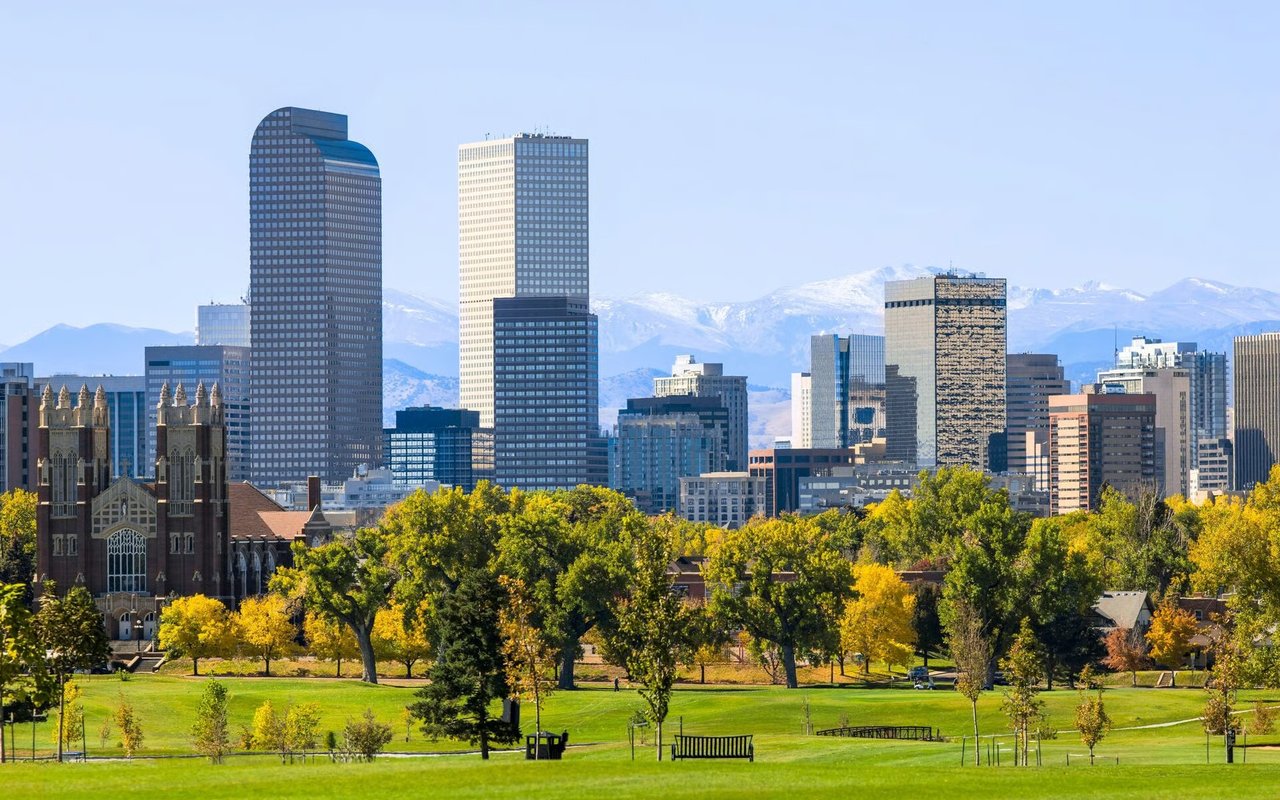
Denver is a city that refuses to be defined by a single identity. Sitting exactly one mile above sea level at the edge of the Great Plains, it functions as the economic and cultural capital of the Rocky Mountain West while remaining, at heart, a collection of fiercely distinct neighborhoods. What ties them together is a shared appetite for the outdoors, a diversifying economy anchored in aerospace, energy, healthcare, and technology, and roughly 300 days of sunshine a year that pull residents outside no matter the season.
For buyers, the practical takeaway is that "living in Denver" means very little until you narrow down which Denver. The creative, brewery-lined blocks of RiNo attract a very different resident than the tree-canopied historic mansions of Country Club or the master-planned family enclaves of the southern suburbs. This guide is built to help you understand those differences and to close on the right home with confidence.
Denver Real Estate Market Snapshot
The Denver housing market has moved into what local agents are calling the "Great Recalibration." The frantic, post-pandemic bidding wars have given way to a far more balanced environment, and for the first time in years buyers have genuine room to negotiate.
The median sold price across the metro currently sits between roughly $614,000 and $635,000 across all property types, holding relatively flat with only modest single-digit growth of around 2.5% year over year. Homes are moving at a measured pace, averaging 18 to 19 median days on market before going under contract, though wider suburban segments can hover closer to 40 to 46 days. Active listings have climbed to roughly 30% above pre-pandemic norms, and that inventory thaw is precisely what has tamed the aggressive bidding of previous years.
The most important trend for buyers and sellers alike is the widening gap between detached and attached homes. Standalone single-family homes remain resilient and hold their value well, while condos and townhomes are facing softer demand and longer market times, driven largely by sharp increases in HOA fees and property insurance costs across Colorado. The strategic implication is clear on both sides: sellers must price with early precision rather than testing the market with an inflated number, and buyers hold the most leverage on any home that has sat past the 30-day mark, where price reductions and seller concessions like mortgage rate buy-downs have become common.
Lifestyle and Culture in Denver
The "gold rush" migration wave has normalized, and in its place Denver has settled into a culture built around intentional, active, and sustainable living. The single biggest draw remains the seamless blend of urban convenience and outdoor access. A standard Denver weekend might mean heading west into the Rockies on I-70 for skiing or mountain biking, or simply lacing up for a jog around Washington Park. Residents genuinely prioritize work-life balance here, and the abundant sunshine makes it easy.
Culturally, Denver is highly decentralized, and your daily experience depends enormously on which neighborhood you plug into. RiNo, the River North Arts District, is the epicenter of the city's creative energy: a dense, walkable corridor famous for its street murals, industrial architecture, craft breweries, and boutique culinary scene. The Highlands and Sloan's Lake fuse historic charm with trendy independent restaurants and immediate access to sweeping lakefront green space. Cherry Creek serves as the polished, upscale anchor, home to high-end shopping, galleries, and premier dining.
That landscape-first sensibility even shapes how people design their homes. Stark white modernism has given way to warm minimalism and biophilic design, with earthy neutrals like terracotta and forest green, organic textures, oversized windows, and indoor greenery treated as structural elements rather than afterthoughts. Meanwhile, the city itself is undergoing multi-billion-dollar infrastructure investment, revitalizing its downtown core and expanding public spaces, all while live entertainment, anchored by the iconic Red Rocks Amphitheatre, remains central to local identity.
Schools and Education
Choosing where to buy in Denver is inseparable from understanding its schools, and here the city proper and the surrounding suburbs operate on very different logic.
Within the city limits, Denver Public Schools (DPS) is the primary district, and it is unusual because of its SchoolChoice enrollment system. Rather than being automatically assigned to a neighborhood school, families rank their top choices across the entire city through a lottery. This means your address doesn't strictly lock you into local test scores, but it does reward early planning and strategy. DPS is large and diverse, with standout magnet and charter options such as Polaris Elementary for highly gifted students, the Denver School of the Arts, and the DSST network of science and technology charters, though like any major urban district it wrestles with challenges including recent debates over school consolidations.
Many families instead target the surrounding suburbs specifically for their traditionally zoned, top-tier districts. The Cherry Creek School District, serving the south and east metro including Greenwood Village and Centennial, consistently ranks among the best in the state and is known for strong funding and advanced STEM pipelines. The Douglas County School District, covering Highlands Ranch, Parker, and Castle Rock, posts graduation rates above 92% and benefits from heavy parent involvement that helps insulate neighborhood property values. To the west, Littleton Public Schools and Jefferson County Public Schools offer reliable neighborhood options alongside high performers like D'Evelyn Junior/Senior High in Lakewood.
Getting Around: Commute and Accessibility
Denver's mobility story is genuinely a tale of two realities: a frequently gridlocked highway system running alongside a progressive and expanding transit network.
If you drive, the pain points are predictable. I-25 forms the north-south spine connecting the southern tech centers to downtown and the northern suburbs, and it slows to bumper-to-bumper crawls during the 7 to 9 a.m. and 4 to 6:30 p.m. peaks. I-70 is the mountain gateway and something of a psychological landmark for locals: on Friday afternoons and Saturday mornings, a one-hour drive west can stretch into a three-hour ordeal, with the congestion reversing on Sunday afternoons as everyone returns.
Public transit, run by the Regional Transportation District (RTD), offers a real alternative for many. Its crown jewel is the A-Line commuter rail, which connects Union Station downtown directly to Denver International Airport every 15 minutes and bypasses airport traffic entirely. RTD is currently completing a major Downtown Rail Reconstruction Project to modernize aging track, while the city rolls out dedicated bus-rapid-transit lanes along arteries like East Colfax. Denver has also made its "Zero Fare for Youth" program permanent, letting anyone 19 and under ride free.
For shorter trips, Denver is remarkably bike-friendly, with hundreds of miles of paved, car-separated paths like the Cherry Creek Trail and the South Platte River Trail. In dense neighborhoods such as Capitol Hill, LoDo, and RiNo, car-free living is entirely realistic. Cross into the outer suburbs, however, and a personal vehicle becomes essentially non-negotiable.
Home Types and Architecture
Denver's housing stock reads like a timeline of the city's growth, and knowing the styles helps you understand both a home's charm and its potential quirks.
Among the historic anchors, the Denver Square, a local take on the American Foursquare, was built heavily between 1890 and 1915. These boxy, symmetrical two-story brick homes maximize interior space and have become favorites for full gut-remodels in neighborhoods like Congress Park, Highland, and Country Club. The Craftsman bungalows of the Highlands and Wash Park are arguably the city's most beloved style, prized for their low-pitched roofs, natural materials, and deep front porches built for the Colorado sun. In premium pockets like Park Hill and Hilltop you'll find Tudor homes whose steep gables aren't just decorative; those pitches shed heavy, wet snow efficiently. And in older areas like Curtis Park and Capitol Hill, Denver's Victorians stand out for being built of brick rather than painted wood, a direct legacy of an 1863 "Brick Ordinance" passed after a fire leveled dozens of downtown buildings.
The modern movement is just as distinctive. Neighborhoods like Harvey Park and Krisana Park are legendary for their concentration of Mid-Century Modern homes with angular rooflines, tongue-and-groove ceilings, and floor-to-ceiling glass. As the city densifies, modern row homes and "slot homes" have reshaped corridors like Sloan's Lake, Berkeley, and RiNo, offering lock-and-leave convenience and coveted rooftop decks with mountain views. Across new builds and flips alike, biophilic design paired with multi-panel sliding glass doors continues to blur the line between indoor and outdoor living.
Parks, Recreation, and the Outdoors
In Denver the outdoors is less a hobby than an organizing principle, and the city backs that up with both a world-class urban park system and a genuinely unique mountain parks program.
Washington Park is the undisputed crown jewel of central Denver, with two lakes, a replica of Martha Washington's garden, and a busy 2.5-mile perimeter loop that serves as the city's hub for running and weekend gatherings. City Park functions as Denver's answer to Central Park, home to the Denver Zoo and the Denver Museum of Nature & Science, with skyline-and-mountain views and the beloved free City Park Jazz series each summer. Confluence Park, where Cherry Creek meets the South Platte at the edge of downtown, features engineered kayak chutes and sunbathing banks and acts as the literal junction for hundreds of miles of regional bike trails.
What surprises many newcomers is that Denver owns more than 14,000 acres of parkland outside its city limits, up in the foothills. Red Rocks Park & Amphitheatre in nearby Morrison is technically a Denver city park, and locals treat it as a fitness mecca, running the amphitheater stairs at dawn. Even Winter Park Resort is owned by the City of Denver and operated through a long-term partnership, giving the city a direct stake in Colorado ski culture. Backing all of this is Denver Parks & Recreation, which maintains dozens of pools and recreation centers and reflects a community that is deeply protective of trail access and outdoor equity.
Dining, Shopping, and Entertainment
Denver has firmly shaken off its old reputation as a "secondary market," and nowhere is that clearer than in its food, retail, and nightlife.
The culinary scene has matured to the point of earning its own Colorado Michelin Guide, with a strong focus on live-fire cooking and farm-to-table sourcing. The Wolf's Tailor in Sunnyside holds two Michelin stars for its inventive, zero-waste Italian-Japanese approach, while Beckon in RiNo offers an intimate 16-seat counter experience. Denver also helped perfect the modern food hall, with spaces like The Source and Denver Milk Market serving as incubators for up-and-coming chefs. And while the city remains the undisputed capital of American craft beer, it has expanded aggressively into natural wine and craft distilling.
Shopping splits neatly between the high-end and the hyper-local. Cherry Creek North and the adjacent Cherry Creek Shopping Center anchor the region's luxury retail, with walkable, tree-lined streets full of designer boutiques and galleries. South Broadway's "Antique Row" offers the vibrant opposite: blocks of vintage clothing, mid-century furniture, and independent record stores. The Tennyson Street corridor in Berkeley rounds things out with local artisan goods and dog-friendly neighborhood shops.
For entertainment, Denver punches well above its weight. Beyond Red Rocks, the indoor circuit is deep, from the Mission Ballroom's adjustable moving stage to the gritty indie roots of the Ogden and Bluebird theaters on Colfax. The Denver Performing Arts Complex, the second-largest such center in the country under one roof, hosts Broadway tours, the Colorado Symphony, and the Denver Center for the Performing Arts.
What Buyers Should Know Before Purchasing
Entering today's Denver market rewards a calculated approach far more than the emotional urgency of the pandemic years. With the median price stabilized around $614,000 to $635,000, accurately priced homes still move quickly, but any listing that sits past the 19-to-30-day window hands real leverage to the buyer. Don't hesitate to ask for concessions such as temporary rate buy-downs or closing cost assistance.
Attached homes deserve extra scrutiny. Townhomes and condos can look attractive on paper, but Colorado's insurance crisis, driven by wildfires and severe hail, has pushed HOA master-policy premiums sharply higher. Before making an offer, review the HOA's financial health and insurance policy carefully so you aren't blindsided by a special assessment or a steep dues increase.
Two structural realities are specific to this region and shouldn't be skipped. First, much of Colorado sits on expansive bentonite clay soil, which swells when wet and shrinks when dry and can drive serious foundation movement, so a structural inspection and a sewer scope are essential rather than optional. Check basement walls for cracking and confirm the home has a working radon mitigation system, as elevated radon is common across the Rocky Mountain region. Second, buyers increasingly value long-term efficiency: solar setups, heat pumps, and modernized electrical panels and windows all support stronger resale demand and lower carrying costs, which matters especially with older Denver Squares and bungalows.
Understanding Closing Costs in Denver
Colorado is, on balance, a relatively affordable state to close in, but it's worth knowing where your money actually goes. Buyer closing costs in the Denver metro typically land in the range of roughly 2% to 4% of the purchase price, while sellers often see higher total costs once real estate commissions are factored in.
One point that pleasantly surprises buyers relocating from other states is Colorado's property transfer tax, or rather the near absence of one. The state imposes only a nominal documentary fee of one cent per $100 of value (0.01%), a fraction of what transfer taxes cost in many other markets. On the buyer's side, the largest line items are usually lender-related, including loan origination fees, appraisal and credit charges, and prepaid interest, alongside prorated property taxes and the establishment of an escrow or reserve account. Title insurance and settlement fees round out the picture, and in Colorado it is customary, though always negotiable, for the seller to pay for the owner's title insurance policy while the buyer covers the lender's policy.
Because so many of these figures are prorated and jurisdiction-specific, the single most useful thing you can do is request a detailed, itemized estimate early. A title and escrow partner who prepares that breakdown up front removes the guesswork long before you reach the closing table.
Title and Ownership Considerations
Title work is where a transaction is quietly protected or quietly compromised, and Denver's long, layered history makes a thorough search genuinely valuable. The core purpose of a title examination is to confirm that the seller has the clear, marketable right to convey the property and to surface anything that could cloud that ownership, from unpaid liens and unresolved judgments to easements, boundary discrepancies, or errors in prior recorded deeds.
Several title issues appear more often here than newcomers expect. Older neighborhoods with a century or more of ownership history, such as Capitol Hill and Curtis Park, are more likely to carry outdated easements or chain-of-title irregularities that need clearing. Across much of the metro and the broader Front Range, severed mineral rights are common, meaning surface ownership and subsurface mineral ownership may have been split decades ago; a proper title review clarifies exactly what you are and aren't buying. Homes in newer master-planned communities frequently carry extensive recorded covenants and metro district obligations that belong on your radar before closing.
This is precisely why owner's title insurance matters. Unlike most insurance, it protects against events that already occurred in the past but haven't yet surfaced, such as a forged signature in an old deed or an unknown heir with a claim. A one-time premium at closing delivers protection for as long as you own the home, and pairing that policy with a meticulous title search is the most reliable safeguard for what is likely your largest investment.
Special Districts and Metro District Taxes
If you're considering a newer development, a master-planned community, or a redeveloped urban corridor anywhere in the metro, you will almost certainly encounter a Metropolitan District, and understanding it is critical to avoiding a post-closing shock.
A Metro District is a specialized independent governmental entity. Rather than paying the full upfront cost of infrastructure, roads, water lines, parks, and streetlights, out of pocket, a developer petitions the municipality to create a district. That district, initially controlled by a board of the developer's own team, issues public bonds to fund construction, and those bonds are repaid over 20 to 40 years through an additional property tax levied directly on the homeowners who buy in.
The impact on your tax bill is significant. Colorado property taxes are calculated in mills, where one mill equals one dollar of tax per $1,000 of assessed value. A standard Denver home typically carries 60 to 80 total mills, but a home inside a metro district can easily add another 40 to 70 mills, which in practice can nearly double the annual property tax on an otherwise identical home just down the street. Metro districts are also a live topic of reform in the state legislature, with critics highlighting the conflict of interest in developers voting to issue and buy their own debt, and proponents countering that without districts, $50,000 to $70,000 would simply be added to each lot's purchase price.
The action item is straightforward: before putting down earnest money on any modern build, request the neighborhood's District Service Plan, find the Mill Levy Cap so you know exactly how high your taxes can legally climb, and check whether the district has an expiration date or allows unlimited debt refinancing.
Local Resources and Community Services
Denver runs on an integrated mix of municipal programs, non-profits, and community foundations that make settling in considerably easier.
The front door to city services is Denver 311. Whether you're checking trash and recycling schedules, reporting a broken water main, or filing a complaint about an unshoveled sidewalk (which the city enforces within 24 hours of snowfall), dialing 311 or using the Pocketgov Denver app routes you to the right agency. The city's recreation centers function as genuine community anchors: the MY Denver Card gives public school students ages 5 to 18 free access to all rec centers and outdoor pools, and select centers double as climate resilience hubs, converting into clean-air cooling shelters during summer wildfire smoke or warming shelters during extreme winter cold.
Beyond municipal services, the region leans on deep non-profit networks. Mile High United Way operates the 211 line, a comprehensive directory connecting residents across the seven-county metro to rental assistance, food banks, and utility relief. Rocky Mountain Human Services curates resource guides for veterans, adults with intellectual disabilities, and early-intervention youth care. And the Denver Foundation, one of the oldest community foundations in the Rocky Mountain West, channels significant funding into grassroots efforts around housing equity and environmental sustainability.
Closing Your Denver Home with First Alliance Title
Buying or selling in a market as layered as Denver's, where metro district levies, expansive-soil inspections, severed mineral rights, and century-old chains of title can all surface in a single transaction, is far smoother with the right closing partner beside you. That's exactly where First Alliance Title comes in. With deep roots across Colorado and a team that understands the specific title and escrow nuances of the Denver metro, they bring meticulous, detail-driven service to every closing, treating your transaction as the milestone it is rather than just another file. If you're preparing to buy, sell, or simply want clear answers about closing costs, title insurance, or what a metro district means for your future tax bill, First Alliance Title is ready to guide you from contract to close with clarity and care. Reach out to their team to start the conversation and experience a closing built around your peace of mind.